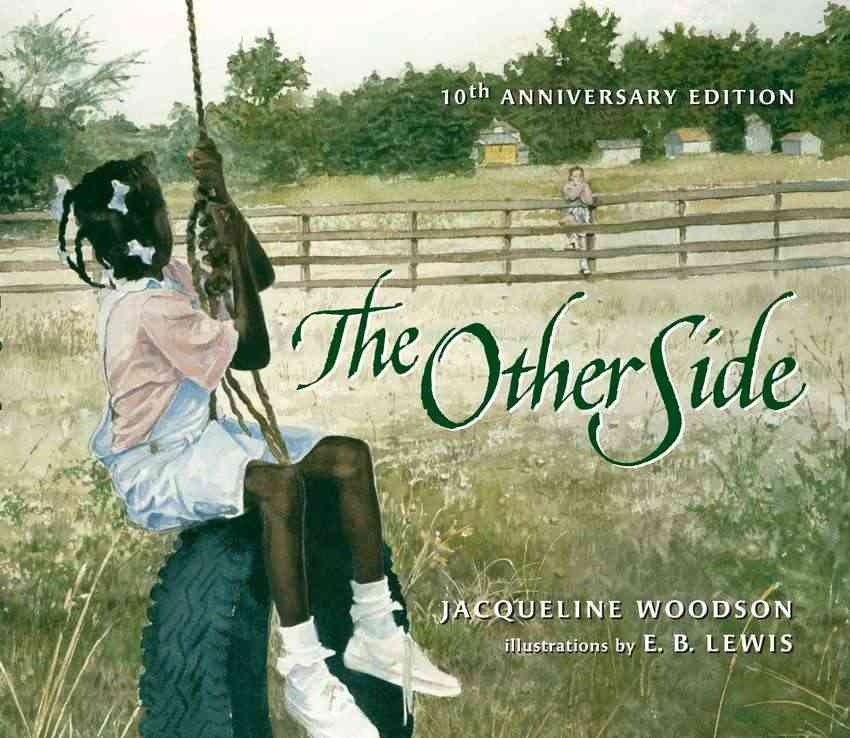
| The Other Side Contributor(s): Woodson, Jacqueline (Author), Lewis, E. B. (Illustrator) |
|||||||
 |
ISBN: 0399231161 ISBN-13: 9780399231162 Publisher: Nancy Paulsen Books
WE WILL NOT BE UNDERSOLD! Click here for our low price guarantee Binding Type: Hardcover - See All Available Formats & Editions Published: January 2001 Annotation: Beautifully rendered in Lewis's striking, lifelike watercolor illustrations, this story by Woodson is a moving, lyrical narrative told in the hopeful voice of a child confused about the fence that divides the black side of town from the white side. Full color. |
||||||
| Additional Information | ||||||||||||||||||||||||
| BISAC Categories: - Juvenile Fiction | Social Themes - Friendship - Juvenile Fiction | Social Themes - Prejudice & Racism - Juvenile Fiction | People & Places - United States - African-american | ||||||||||||||||||||||||
| Dewey: E | ||||||||||||||||||||||||
| LCCN: 99042055 | ||||||||||||||||||||||||
| Age Level: 5-8 | ||||||||||||||||||||||||
| Grade Level: Kindergarten-3 | ||||||||||||||||||||||||
| Lexile Measure: 490 AD (Adult Directed Text) | ||||||||||||||||||||||||
| Physical Information: 0.4" H x 11.6" W x 10.1" L (1.02 lbs) 32 pages | ||||||||||||||||||||||||
| Themes: - Theometrics - Secular - Ethnic Orientation - African American - Ethnic Orientation - Multicultural - Topical - Friendship - Seasonal - Summer | ||||||||||||||||||||||||
| Features: Dust Cover, Ikids, Illustrated, Price on Product | ||||||||||||||||||||||||
| Awards: Georgia Children's Book Award, Nominee, Picture Storybook, 2002 North Carolina Children's Book Award, Nominee, Picture Book, 2003 Pennsylvania Young Reader's Choice Award, Nominee, Grades K-3, 2004 Young Hoosier Book Award, Nominee, Picture Book, 2005 New Atlantic Independent Booksellers Association Award, Winner, Picture Book, 2001 Parents Choice Award (Spring) (1998-2007), Winner, Approved, 2001 Golden Sower Award, Nominee, Grades K-3, 2003 Children's Books of Distinction Awards, Winner, Picture Book, 2002 South Carolina Childrens, Junior and Young Adult Book Award, Nominee, Children's, 2003 Red Clover Award, Nominee, Picture Book, 2003 Charlotte Award, Nominee, Primary, 2004 Louisiana Young Readers' Choice Award, Honor Book, Young Readers, 2004 Bluebonnet Awards, Nominee, Children's, 2003 California Young Reader Medal, Nominee, Picture Bk/Older Reader, 2003 | ||||||||||||||||||||||||
| Review Citations: Publishers Weekly 12/04/2000 pg. 73 Booklist 12/15/2000 pg. 804 Kirkus Review - Children 01/01/2001 pg. 61 School Library Journal 01/01/2001 pg. 112 Booklist 02/15/2001 pg. 1154 New York Times 03/11/2001 pg. 26 Christian Home & School 05/01/2001 pg. 29 Hornbook Guide to Children 01/01/2001 pg. 282 - Below Average, With Minor Flaw Booklist Ed Choice Adu Bk YA's 01/01/2002 pg. 769 Booklist 02/15/2002 pg. 1034 ALA Notable Children's Books 03/15/2002 pg. 1234 Hornbook Guide to Children 07/01/2001 pg. 282 - Below Average, With Minor Flaw School Library Journal 11/01/2002 | ||||||||||||||||||||||||
| Accelerated Reader Info | ||||||||||||||||||||||||
| Quiz #: 46154 Reading Level: 2.7 Interest Level: Lower Grades Point Value: 0.5 |
||||||||||||||||||||||||
| Descriptions, Reviews, Etc. |
||||||||||||||||||||||||
| Publisher Description: Jacqueline Woodson is the 2018-2019 National Ambassador for Young People's Literature Clover's mom says it isn't safe to cross the fence that segregates their African-American side of town from the white side where Anna lives. But the two girls strike up a friendship, and get around the grown-ups' rules by sitting on top of the fence together. With the addition of a brand-new author's note, this special edition celebrates the tenth anniversary of this classic book. As always, Woodson moves readers with her lyrical narrative, and E. B. Lewis's amazing talent shines in his gorgeous watercolor illustrations. |
||||||||||||||||||||||||
| Customers who bought this item also bought... | ||||||||||||||||||||||||
| ||||||||||||||||||||||||
| Customer ReviewsSubmit your own review | ||||||||||||||||||||||||
| To tell a friend about this book, you must Sign In First! |


Copyright © 2024 TheReadingWarehouse.com